
Microplastics and the more dangerous Nanoplastics have just begun making headlines. We are beginning to awaken to the toxic effects of plastic proliferation in our society, specifically the use of ‘forever plastics’ or plastics that take hundreds of years to fully decompose if they ever decompose. The type of plastics that are now found in the tissues of every human, including the brain and many, if not most, organisms on earth, at various levels. Microplastics and nanoplastics can even be found in the fetus. While the effects haven’t been fully studied or understood, and are considered ‘inert,’ they definitely don’t belong inside any of us.
While we can’t get rid of these entirely yet, and life goes on, we can definitely reduce the rate at which we ingest or breathe them. This is part of a series of health micro-capsules designed to help mitigate the presence of micro and nano plastics at home and reduce the intake to our bodies. In this micro-capsule, we will briefly explore – The Kitchen.
Kitchen Microplastic Purge
The Top 5 easy changes for less microplastics in your kitchen
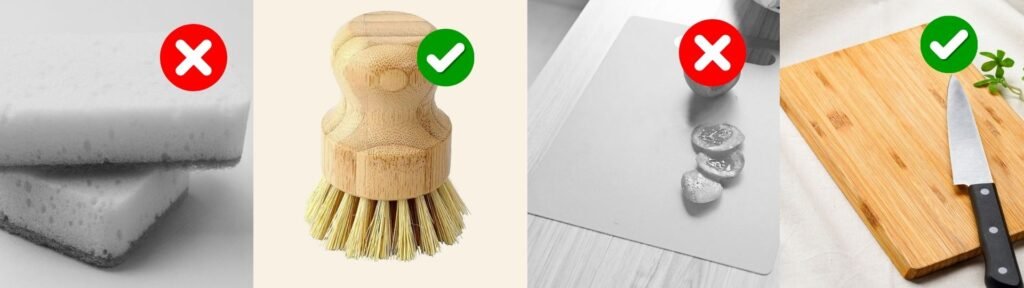
- Ditch the cellulose sponge, get natural bristle brushes.
Cellulose sponges release thousands and tens of thousands of microplastics per use! - Change your plastic topperwear to glass topperwear
All plastics constantly break down, slowly, and they latch onto moisture or liquid, which you end up ingesting. - Install a Microplastic removal filter to drink water from the fosset
If you don’t use filtered water, and still drink from the fosset or worse use plastic bottles or containers. Some easy-to-install, commercially available microplastic filters are already available, like this one from Britta. - Don’t let any regular plastic touch your food; use only fully compostable materials, including for your garbage
Plastic film and plastic bags constantly shed microplastics. Make sure these are from compostable sources so they can break down. - Ditch the plastic cutting board for a wooden board.
This is one of the biggest sources of microplastics: every time your knife hits that board. Switch to wood!